

How To Test Dishwasher Heating Element Without Removing
Contents
- Reasons Why Water Doesn't Estrus Up
- Testing H2o Heater Element: The Two Processes
- Materials Needed
- Setting Upward
- First Process: Defective Element Testing
- 2nd Process: Curt Circuit Testing
- Replacing The Defective Element
- Step 1: Have Out the Bad Element
- Pace 2: Putting the New Element In Place
- FAQs
- Are all the elements of an electric water heater the same?
- What happens when a heating chemical element fails?
- What does the reset button do?
Does your electric h2o heater struggle to heat, run out of hot water, or doesn't produce any hot water at all? Testing your heating element volition assistance you lot diagnose the problem.
In full general, there are two processes to exam water heater elements; defective element testing and brusque circuit testing.
However, you might think information technology would be impossible to practice so without a multimeter tester. You're mistaken because, in this guide, I will teach you a do-it-yourself (DIY) process to test a water heater chemical element without a multimeter.
Reasons Why H2o Doesn't Rut Upwardly
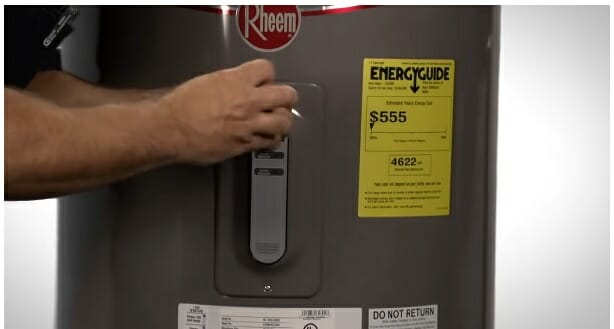
At that place are other reasons for the lack of hot h2o. Verify whether the circuit breaker is switched on and not tripped before testing the elements.
Likewise, immediately above the higher thermostat, hit the reset push button on the high-temperature cutoff. You may resolve the problem past resetting the circuit breaker or the high-temperature cutoff, but it may nevertheless have an electrical trouble as a root crusade in the first place.
Test h2o heater elements if they trip once again.
Testing Water Heater Chemical element: The 2 Processes
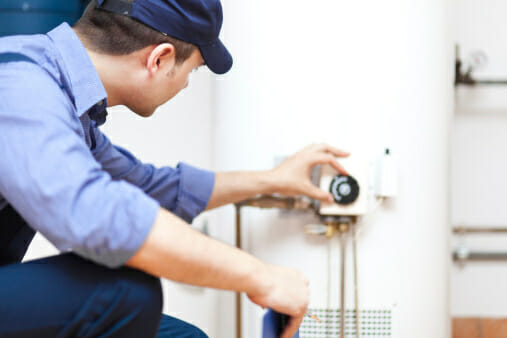
Materials Needed
- Noncontact voltage tester
- Long-nose pliers
- Screwdriver
- Heating chemical element
- Heater element wrench
- Continuity tester
Setting Up
Before we proceed to the types of processes nearly how to test water heater elements without a multimeter, let u.s. beginning examine the electrical water heater that we will be working on for safety purposes:
Comprehend Plates Should Be Removed
- At the circuit breaker, plough off the electricity.
- To access the thermostats and elements, remove the metal covers.
- Brand sure the power is turned off using a noncontact voltage tester to affect the electrical connections.
Examine The Wires
- Examine the cables that pb towards the water heater.
- You'll need to remove the metal cover with your screwdriver kickoff to go through the elements.
- Remove the insulator and concord the tester near the wires coming into the superlative of the high-temperature cutoff switch.
- Place the tester against the h2o heater'southward metal shell.
- Information technology's okay to exam water heater elements if the tester doesn't calorie-free up.
Commencement Process: Defective Element Testing
You lot will need the utilize of your continuity tester here.
- The wires must be disconnected from the final screws.
- Connect ane of the element screws with the alligator clench.
- With the tester probe, touch the other spiral.
- Practice a heater chemical element replacement if it does non illuminate.
- Information technology is not lacking if it does non illuminate.
Second Procedure: Short Circuit Testing
- The alligator clip should be attached to i of its element screws.
- Touch the element mounting bracket with the testing probe.
- Behave out the test on all of the remaining elements.
- There is a curt if the tester light comes on; at which betoken at that place is a need for water heater element replacement.
Note: Subsequently you examination h2o heater elements and are in excellent shape, your thermostats or cutoff switch is probably the source of the problem. Replacing both of them will resolve it. But if it is defective, hither's a guide for your water heater chemical element replacement:
Replacing The Lacking Element
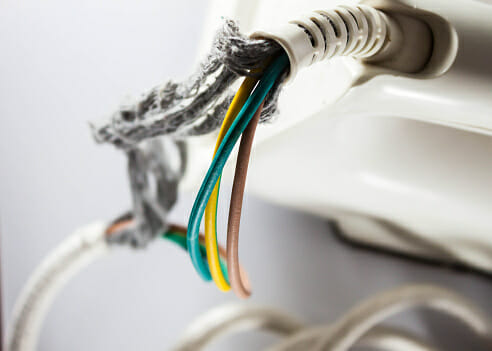
Step 1: Take Out the Bad Chemical element
- Close the inlet valve for cold h2o.
- Turn on your kitchen'south hot water faucet.
- Connect your h2o hose to the drain valve and open it to drain the tank.
- With a heater element wrench, unscrew the old chemical element.
- To turn the socket, you lot'll need a long, firm screwdriver.
- Loosen the threads using a cold chisel and hammer if it won't unscrew.
Stride 2: Putting the New Chemical element In Place
- Place the new chemical element into your electric water heater with your heating element wrench and tighten information technology.
- Reconnect the wires, ensuring they are securely connected.
- The insulation and metal coverings should be replaced. And you are all washed!
FAQs
Are all the elements of an electric water heater the same?
The top and bottom heating elements are similar, and the upper and lower thermostats and the high limit device control the temperature. The size of electric h2o heater elements varies, but the most mutual is 12′′. (300 mm). (1)
What happens when a heating chemical element fails?
The heating elements inside an electrical water heater pause, resulting in a loss of hot h2o. Your h2o may kickoff to arctic down gradually since the water heater chemical element has burned out. You volition only become common cold h2o if the second water heater element fails. (two)
Your electric water heater's reset push is a safety feature that turns off the power to your water heater when the temperature within it reaches 180 degrees Fahrenheit. The reset button is too known equally the emergency cutoff switch.
Some other multimeter learning guides nosotros've listed below that yous can bank check or bookmark for later on reference.
- How to test a capacitor with a multimeter
- How to test fuses with a multimeter
- How to examination Christmas lights with a multimeter
References
(i) temperature – https://world wide web.britannica.com/science/temperature
(ii) heating – https://www.britannica.com/technology/heating-procedure-or-organization
Source: https://toolsweek.com/how-to-test-water-heater-element-without-multimeter/
0 Response to "How To Test Dishwasher Heating Element Without Removing"
Post a Comment